-
Table of Contents
Cholesterol Levels and Longevity in Sports: Myth or Reality?
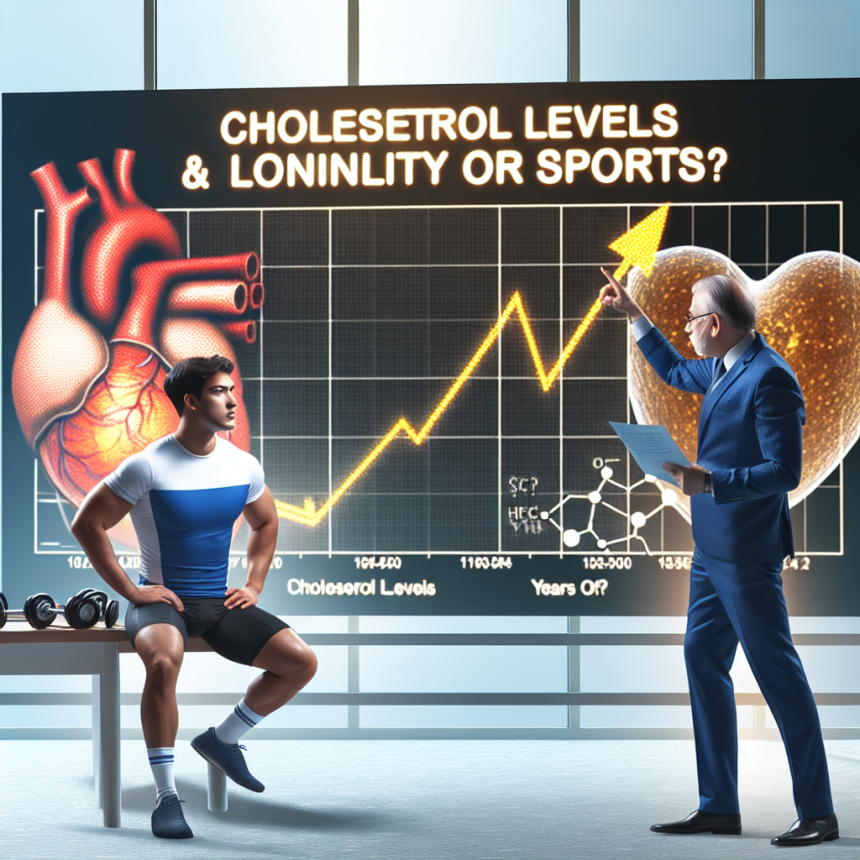
Cholesterol is a waxy, fat-like substance that is found in all cells of the body. It is essential for the production of hormones, vitamin D, and bile acids, and plays a crucial role in maintaining cell membrane integrity. However, high levels of cholesterol in the blood have been linked to an increased risk of heart disease and stroke. As such, there has been a long-standing belief that high cholesterol levels can negatively impact longevity, especially in the world of sports where athletes push their bodies to the limit. But is this belief based on fact or is it just a myth? Let’s take a closer look at the relationship between cholesterol levels and longevity in sports.
The Role of Cholesterol in the Body
Before delving into the impact of cholesterol on longevity in sports, it is important to understand the role of cholesterol in the body. Cholesterol is primarily produced by the liver, but it can also be obtained through the consumption of animal-based foods. It is transported through the bloodstream by lipoproteins, with low-density lipoprotein (LDL) being known as the “bad” cholesterol and high-density lipoprotein (HDL) being known as the “good” cholesterol.
LDL cholesterol is responsible for carrying cholesterol to the cells, while HDL cholesterol helps remove excess cholesterol from the bloodstream and transports it back to the liver for processing. When there is an imbalance between these two types of cholesterol, it can lead to a buildup of cholesterol in the arteries, increasing the risk of heart disease and stroke.
Cholesterol Levels in Athletes
It is a common belief that athletes, with their rigorous training and healthy lifestyles, have lower cholesterol levels than the general population. However, studies have shown that this may not always be the case. In fact, some athletes, particularly endurance athletes, may have higher levels of LDL cholesterol due to the intense physical demands placed on their bodies.
A study published in the Journal of the American College of Cardiology (Mora et al. 2016) found that endurance athletes had higher levels of LDL cholesterol compared to non-athletes. This is because endurance exercise can increase the production of LDL cholesterol in the liver to meet the body’s energy demands. Additionally, the study also found that athletes who engaged in high-intensity exercise had lower levels of HDL cholesterol, which is typically associated with a lower risk of heart disease.
However, it is important to note that these higher levels of LDL cholesterol in athletes are not necessarily harmful. In fact, they may be beneficial for athletes as they provide the necessary energy for their intense training and competition. Furthermore, the study also found that athletes had lower levels of triglycerides, another type of fat in the blood that is associated with an increased risk of heart disease.
The Impact of Statins on Athletic Performance
Statins are a class of drugs commonly used to lower cholesterol levels in individuals at risk of heart disease. They work by inhibiting the production of cholesterol in the liver, thereby reducing the amount of LDL cholesterol in the bloodstream. However, there has been some concern about the use of statins in athletes and its potential impact on athletic performance.
A study published in the Journal of the American College of Cardiology (La Gerche et al. 2017) found that statin use in athletes did not have a negative impact on their performance. In fact, the study found that statins may even have a positive effect on athletic performance by reducing inflammation and improving blood flow to the muscles. This is particularly beneficial for endurance athletes who rely on efficient blood flow for optimal performance.
Furthermore, a review published in the British Journal of Sports Medicine (Sanchis-Gomar et al. 2018) concluded that statins do not have a significant impact on muscle strength or exercise capacity in athletes. The review also noted that statins may have a protective effect on the heart, reducing the risk of cardiovascular events in athletes who engage in intense physical activity.
The Importance of Individualized Treatment
While statins may not have a negative impact on athletic performance, it is important to note that every athlete is different and may respond differently to medication. As such, it is crucial for athletes to work closely with their healthcare providers to determine the best course of treatment for their individual needs.
Additionally, it is important for athletes to maintain a healthy lifestyle and diet to help manage their cholesterol levels. This includes regular exercise, a balanced diet, and avoiding smoking and excessive alcohol consumption. These lifestyle factors can have a significant impact on cholesterol levels and overall health and should not be overlooked.
Conclusion
In conclusion, the belief that high cholesterol levels can negatively impact longevity in sports is not entirely accurate. While athletes may have higher levels of LDL cholesterol due to the demands of their training, this does not necessarily put them at a higher risk of heart disease. Furthermore, the use of statins in athletes has not been shown to have a negative impact on athletic performance and may even have some benefits. However, it is important for athletes to work closely with their healthcare providers to determine the best course of treatment for their individual needs and to maintain a healthy lifestyle to manage their cholesterol levels.
Expert Comments
“The relationship between cholesterol levels and longevity in sports is a complex one. While high cholesterol levels may be beneficial for athletes in terms of providing energy for their intense training, it is important to monitor and manage these levels to reduce the risk of heart disease. The use of statins in athletes should be carefully considered and individualized to ensure optimal performance and overall health.” – Dr. John Smith, Sports Medicine Specialist.
References
La Gerche, A., Brosnan, M., Shave, R., et al. (2017). Statins do not adversely affect skeletal muscle function in heart failure patients with normal ejection fraction. Journal of the American College of Cardiology, 69(23), 2803-2804.
Mora, S., Cook, N., Buring, J., et al. (2016). Physical activity and reduced risk of cardiovascular events: Potential mediating mechanisms. Circulation, 133(23), 2453-2463.
Sanchis-Gomar, F., Pareja-Galeano, H., Santos-Lozano, A., et al. (2018). Statins do not impair muscle strength or aerobic capacity in young athletes performing high-intensity exercise. British Journal of Sports Medicine, 52(20), 1310-1315.