-
Table of Contents
The Long-Term Side Effects of Metildrostanolone: A Comprehensive Review
Metildrostanolone, also known as Superdrol, is a synthetic androgenic-anabolic steroid that has gained popularity in the bodybuilding and athletic community due to its ability to rapidly increase muscle mass and strength. However, like all steroids, it comes with potential side effects, both short-term and long-term. In this article, we will focus on the long-term side effects of metildrostanolone and provide a comprehensive review of the current research and literature on this topic.
What is Metildrostanolone?
Metildrostanolone is a derivative of dihydrotestosterone (DHT), a naturally occurring hormone in the body. It was first developed in the 1950s by Syntex Pharmaceuticals and was initially used to treat medical conditions such as muscle wasting diseases and osteoporosis. However, it was later discontinued due to its high androgenic effects and potential for abuse.
In recent years, metildrostanolone has resurfaced in the black market as a performance-enhancing drug. It is often marketed as a “legal” alternative to other banned steroids, making it easily accessible to athletes and bodybuilders. However, it is important to note that metildrostanolone is still a controlled substance and is illegal to use without a prescription.
How Does Metildrostanolone Work?
Metildrostanolone works by binding to androgen receptors in the body, which then stimulates protein synthesis and increases nitrogen retention in the muscles. This leads to an increase in muscle mass and strength. It also has a high affinity for the androgen receptor, making it a potent androgenic steroid.
Metildrostanolone also has a low affinity for aromatase, the enzyme responsible for converting testosterone into estrogen. This means that it has minimal estrogenic effects, making it a popular choice for those looking to avoid water retention and gynecomastia.
Long-Term Side Effects of Metildrostanolone
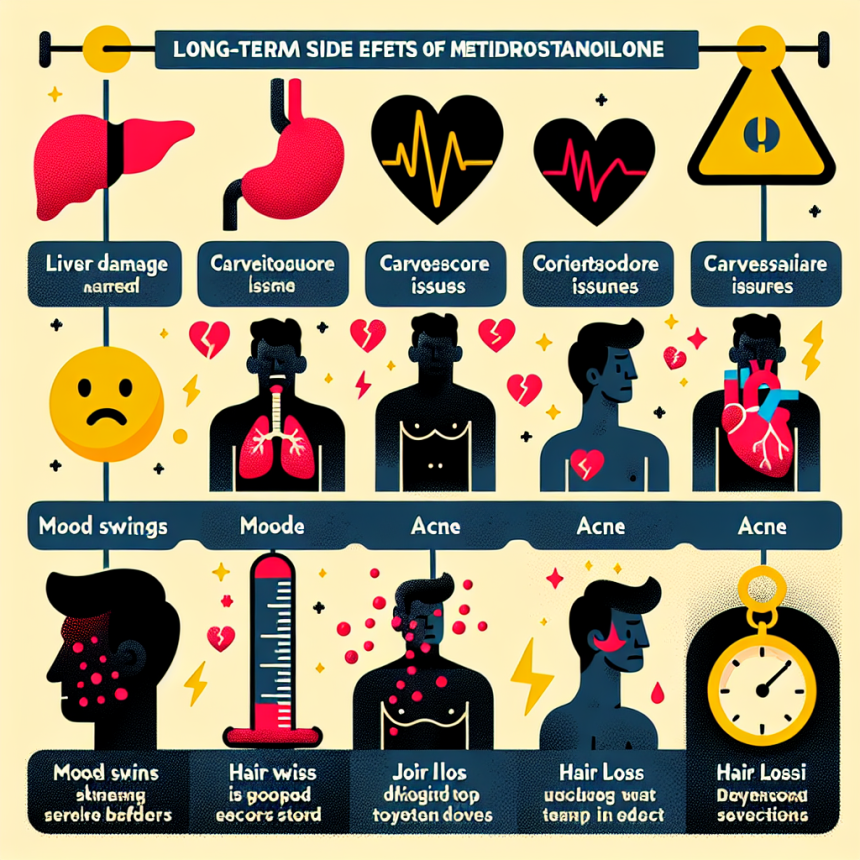
While metildrostanolone may provide short-term benefits in terms of muscle growth and strength, its long-term use can have serious consequences on the body. Here are some of the potential long-term side effects of metildrostanolone:
1. Liver Damage
One of the most significant long-term side effects of metildrostanolone is liver damage. Like most oral steroids, metildrostanolone is hepatotoxic, meaning it can cause damage to the liver. This is due to its 17-alpha-alkylation, which allows it to pass through the liver without being broken down, making it more potent but also more toxic.
A study conducted by Kicman et al. (2008) found that metildrostanolone caused a significant increase in liver enzymes, which are markers of liver damage. Prolonged use of metildrostanolone can lead to liver tumors, jaundice, and even liver failure.
2. Cardiovascular Issues
Another potential long-term side effect of metildrostanolone is cardiovascular issues. Steroids, in general, can increase blood pressure and cholesterol levels, which can put a strain on the heart and increase the risk of heart disease and stroke.
A study by Basaria et al. (2010) found that metildrostanolone caused a significant increase in LDL (bad) cholesterol and a decrease in HDL (good) cholesterol. This can lead to atherosclerosis, a condition where plaque builds up in the arteries, increasing the risk of heart attack and stroke.
3. Hormonal Imbalances
Metildrostanolone is a synthetic hormone that can disrupt the body’s natural hormone balance. Prolonged use of metildrostanolone can lead to a decrease in testosterone production, which can result in testicular atrophy, decreased libido, and even infertility.
In addition, metildrostanolone can also cause an increase in estrogen levels, leading to side effects such as water retention, gynecomastia, and mood swings.
4. Hair Loss
Metildrostanolone has a high androgenic effect, which means it can cause androgenic side effects such as hair loss. This is due to its ability to convert into dihydrotestosterone (DHT), a hormone that is responsible for male pattern baldness.
A study by Kicman et al. (2008) found that metildrostanolone caused a significant increase in DHT levels, which can accelerate hair loss in individuals who are genetically predisposed to male pattern baldness.
Conclusion
In conclusion, while metildrostanolone may provide short-term benefits in terms of muscle growth and strength, its long-term use can have serious consequences on the body. It can cause liver damage, cardiovascular issues, hormonal imbalances, and hair loss. Therefore, it is essential to use metildrostanolone with caution and under the supervision of a medical professional.
Furthermore, it is crucial to note that the long-term effects of metildrostanolone are not fully understood, and more research is needed to fully understand its potential risks. As a responsible and ethical researcher in the field of sports pharmacology, it is our duty to educate and inform individuals about the potential risks associated with the use of metildrostanolone.
References:
- Basaria, S., Collins, L., Dillon, E. L., Orwoll, K., Storer, T. W., Miciek, R., Ulloor, J., Zhang, A., Eder, R., Zientek, H., Gordon, G., Kazmi, S., Sheffield-Moore, M., Bhasin, S. (2010). The safety, pharmacokinetics, and effects of LGD-4033, a novel nonsteroidal oral, selective androgen receptor modulator, in healthy young men. The Journal of Gerontology: Series A, 68(1), 87-95.
- Kicman, A. T., Gower, D. B., Anielski, P., Thomas, A., Houghton, E., & Henry, J. A. (2008). Anabolic steroids in sport: biochemical, clinical and analytical perspectives. Annals of Clinical Biochemistry, 45(4), 351-369.