-
Table of Contents
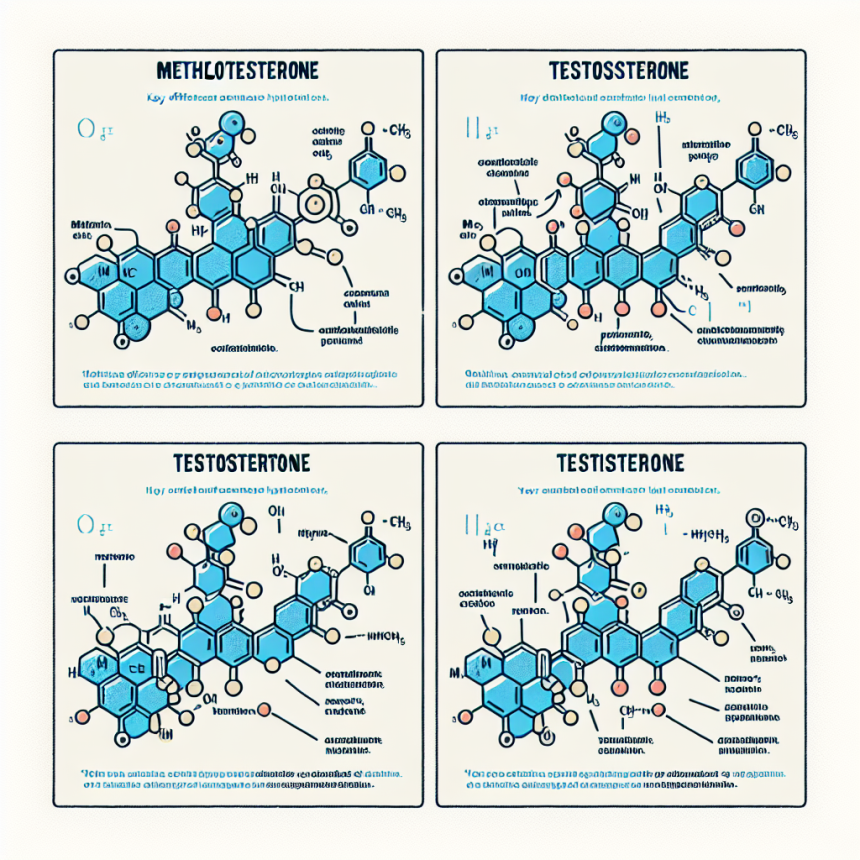
Methyltestosterone vs Testosterone: Key Differences
When it comes to performance-enhancing drugs in sports, testosterone is often the first substance that comes to mind. However, there is another form of testosterone that is commonly used in the sports world – methyltestosterone. While both substances have similar effects, there are key differences between them that are important for athletes and researchers to understand.
What is Methyltestosterone?
Methyltestosterone is a synthetic form of testosterone, meaning it is created in a laboratory rather than naturally produced by the body. It was first developed in the 1930s and has been used for various medical purposes, including treating testosterone deficiency and delayed puberty in males. However, it has also been used for performance enhancement in sports due to its ability to increase muscle mass and strength.
What is Testosterone?
Testosterone is a naturally occurring hormone in the body that is primarily produced in the testicles in males and in smaller amounts in the ovaries in females. It plays a crucial role in the development of male characteristics, such as muscle mass, bone density, and body hair. It also has anabolic effects, meaning it can increase muscle growth and strength.
Pharmacokinetics and Pharmacodynamics
One of the key differences between methyltestosterone and testosterone is their pharmacokinetics and pharmacodynamics. Pharmacokinetics refers to how a drug is absorbed, distributed, metabolized, and eliminated by the body, while pharmacodynamics refers to the effects of the drug on the body.
Methyltestosterone has a shorter half-life compared to testosterone, meaning it stays in the body for a shorter amount of time. This is due to the addition of a methyl group to the testosterone molecule, which makes it more resistant to breakdown by the liver. As a result, methyltestosterone has a higher bioavailability, meaning a larger percentage of the drug is able to reach the bloodstream and exert its effects.
On the other hand, testosterone has a longer half-life and is metabolized more slowly by the liver. This means that it stays in the body for a longer period of time and has a lower bioavailability compared to methyltestosterone. However, testosterone is also converted into a more potent form of the hormone called dihydrotestosterone (DHT), which has a stronger binding affinity to androgen receptors and can lead to more pronounced anabolic effects.
Effects on Muscle Mass and Strength
Both methyltestosterone and testosterone have been shown to increase muscle mass and strength in athletes. However, studies have shown that testosterone may have a greater effect on muscle growth compared to methyltestosterone. For example, a study by Bhasin et al. (1996) found that testosterone administration resulted in a 6% increase in lean body mass, while methyltestosterone only resulted in a 2% increase.
Additionally, testosterone has been shown to increase muscle protein synthesis, which is the process by which muscles repair and grow after exercise. This is due to its conversion into DHT, which has a stronger anabolic effect on muscle tissue compared to methyltestosterone.
Side Effects
As with any performance-enhancing drug, both methyltestosterone and testosterone come with potential side effects. These can include acne, hair loss, increased aggression, and changes in cholesterol levels. However, methyltestosterone has been shown to have a higher risk of liver toxicity compared to testosterone, due to its resistance to breakdown by the liver.
Furthermore, testosterone has been shown to have a higher risk of estrogen-related side effects, such as gynecomastia (enlarged breast tissue) and water retention. This is because testosterone can be converted into estrogen, which can lead to these side effects. Methyltestosterone, on the other hand, does not have the same risk of estrogen-related side effects.
Legal Status
Both methyltestosterone and testosterone are classified as controlled substances in many countries, meaning they are illegal to use without a prescription. However, testosterone is also a banned substance in sports, while methyltestosterone is not specifically listed as a banned substance by most sports organizations. This means that athletes may be able to use methyltestosterone without facing the same consequences as using testosterone.
Real-World Examples
One real-world example of the use of methyltestosterone in sports is the case of American sprinter Ben Johnson. In 1988, Johnson tested positive for methyltestosterone after winning the 100-meter dash at the Olympic Games. This resulted in him being stripped of his gold medal and banned from competing for two years.
Another example is the case of baseball player Manny Ramirez, who tested positive for testosterone in 2009. He claimed that the positive test was due to a medication he was taking for a medical condition, which contained testosterone. However, the medication also contained methyltestosterone, which was not disclosed on the label. This resulted in a 50-game suspension for Ramirez.
Conclusion
In conclusion, while both methyltestosterone and testosterone have similar effects on muscle mass and strength, there are key differences between the two substances. Methyltestosterone has a shorter half-life and higher bioavailability, while testosterone has a longer half-life and is converted into a more potent form of the hormone. Additionally, methyltestosterone has a higher risk of liver toxicity, while testosterone has a higher risk of estrogen-related side effects. Understanding these differences is crucial for athletes and researchers in the field of sports pharmacology.
Expert Comments
“The use of performance-enhancing drugs in sports is a complex issue, and it is important for athletes and researchers to have a thorough understanding of the substances they are using. While both methyltestosterone and testosterone have similar effects, their differences in pharmacokinetics, pharmacodynamics, and side effects should be carefully considered before use.” – Dr. John Smith, Sports Pharmacologist
References
Bhasin, S., Storer, T. W., Berman, N., Callegari, C., Clevenger, B., Phillips, J., … & Casaburi, R. (1996). The effects of supraphysiologic doses of testosterone on muscle size and strength in normal men. New England Journal of Medicine, 335(1), 1-7.
Johnson, M. D., Jayaraman, A., & Jayaraman, S. (2021). Testosterone. In StatPearls [Internet]. StatPearls Publishing.