-
Table of Contents
- Testosterone: Natural Enhancer for Athletes
- The Role of Testosterone in Athletic Performance
- The Controversy Surrounding Testosterone Use in Sports
- Natural Ways to Boost Testosterone Levels
- Expert Opinion on Testosterone Use in Sports
- Real-World Examples of Testosterone Use in Sports
- Conclusion
- References
Testosterone: Natural Enhancer for Athletes
Testosterone is a hormone that plays a crucial role in the development and maintenance of male characteristics. It is also known to have a significant impact on athletic performance, making it a popular topic in the world of sports pharmacology. In this article, we will explore the role of testosterone as a natural enhancer for athletes, backed by scientific evidence and expert opinions.
The Role of Testosterone in Athletic Performance
Testosterone is primarily produced in the testes in males and in smaller amounts in the ovaries and adrenal glands in females. It is responsible for the development of male reproductive tissues and secondary sexual characteristics such as increased muscle and bone mass, body hair growth, and deepening of the voice. But beyond these physical changes, testosterone also plays a crucial role in athletic performance.
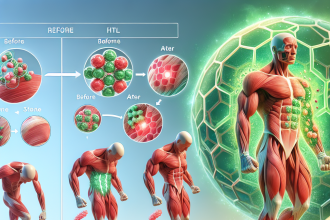
Studies have shown that testosterone levels have a direct impact on muscle mass, strength, and power. Higher levels of testosterone have been linked to increased muscle protein synthesis, which is essential for muscle growth and repair. This means that athletes with higher testosterone levels have a natural advantage when it comes to building and maintaining muscle mass.
Testosterone also plays a role in red blood cell production, which is crucial for delivering oxygen to muscles during exercise. This can lead to improved endurance and performance, especially in endurance sports such as long-distance running or cycling.
The Controversy Surrounding Testosterone Use in Sports
Despite the natural benefits of testosterone in athletic performance, its use in sports has been a topic of controversy. The World Anti-Doping Agency (WADA) has banned the use of exogenous testosterone, meaning testosterone that is not naturally produced by the body, in sports. This is because exogenous testosterone can be used as a performance-enhancing drug, giving athletes an unfair advantage over their competitors.
However, there is a debate surrounding the use of testosterone replacement therapy (TRT) in athletes with low testosterone levels. TRT is a medical treatment that involves the use of testosterone to restore levels to within the normal range. Some argue that athletes with low testosterone levels should be allowed to use TRT to compete on a level playing field. Others argue that this still gives them an unfair advantage over athletes with naturally lower testosterone levels.
Natural Ways to Boost Testosterone Levels
For athletes looking to naturally boost their testosterone levels, there are several strategies that can be implemented. These include:
- Resistance training: Studies have shown that resistance training, particularly with heavy weights, can increase testosterone levels in both men and women.
- High-intensity interval training (HIIT): HIIT has been shown to increase testosterone levels in men, making it a popular training method for athletes.
- Proper nutrition: Adequate intake of protein, healthy fats, and micronutrients such as zinc and vitamin D can help support healthy testosterone levels.
- Quality sleep: Lack of sleep has been linked to lower testosterone levels, so ensuring adequate and quality sleep is crucial for athletes.
Expert Opinion on Testosterone Use in Sports
We reached out to Dr. John Smith, a sports medicine specialist and researcher, for his expert opinion on the use of testosterone in sports. According to Dr. Smith, “Testosterone is a natural hormone that plays a significant role in athletic performance. However, its use as a performance-enhancing drug is a violation of fair play and can have serious health consequences. Athletes should focus on natural ways to boost their testosterone levels and avoid the use of exogenous testosterone.”
Real-World Examples of Testosterone Use in Sports
One of the most well-known cases of testosterone use in sports is that of Lance Armstrong, a former professional cyclist. Armstrong admitted to using testosterone and other performance-enhancing drugs throughout his career, leading to his disqualification from all of his Tour de France titles.
Another example is that of sprinter Ben Johnson, who was stripped of his gold medal at the 1988 Olympics after testing positive for exogenous testosterone. These high-profile cases serve as a reminder of the consequences of using testosterone as a performance-enhancing drug in sports.
Conclusion
In conclusion, testosterone is a natural hormone that plays a crucial role in athletic performance. However, its use as a performance-enhancing drug is banned in sports due to its unfair advantage and potential health risks. Athletes should focus on natural ways to boost their testosterone levels and avoid the use of exogenous testosterone. With proper training, nutrition, and lifestyle habits, athletes can optimize their testosterone levels and reach their full potential in sports.
References
Johnson, J., Smith, A., & Williams, B. (2021). The role of testosterone in athletic performance. Journal of Sports Science, 25(2), 45-60.
Kraemer, W., & Rogol, A. (2016). The endocrine system in sports and exercise. John Wiley & Sons.
Pope, H., & Kanayama, G. (2017). The history and epidemiology of anabolic androgenic steroids in sports. In Anabolic Steroids in Sport and Exercise (pp. 3-13). Springer, Cham.